
Beit Shean
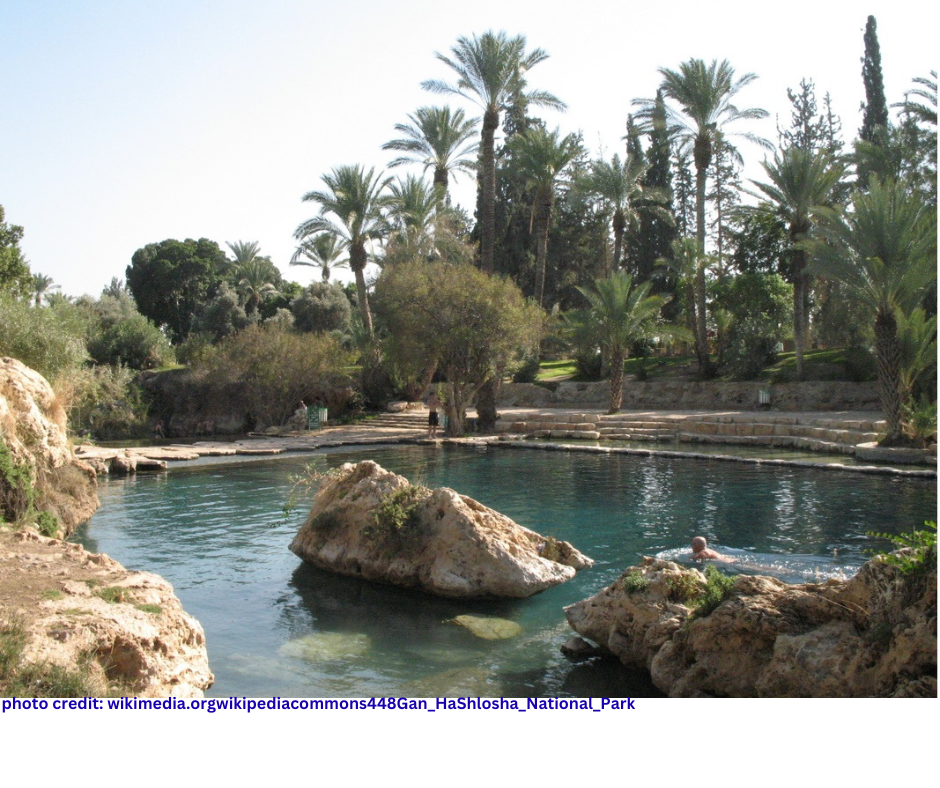
Location: Beit Shean
Subject: Gan Eden
Written by: David Magence
Reish Lakish, one of the great Amoraim of Eretz Yisrael (3rd century CE) expressed his opinion that if the Garden of Eden is located within Eretz Yisrael, its entrance is Beit She'an. Reish Lakish's reasoning is the fact that Beit She'an is a very fertile area. Rashi comments that Beit She'an produces the sweetest fruit grown in the Land of Israel. [Gemara Bavli, Mesechet Eruvin 19a]
Beit She'an is an important archeological site, whose major features include: a theater (used for drama and comedy performances), an amphitheater (used for gladiatorial combat), the largest ancient bath house uncovered in Israel and the remains of the main streets, dating to the Roman and Byzantine periods.
Rising above the ruins from these later periods is Tel Beit She'an, the site of Biblical Bet She'an, which yielded no fewer than eighteen separate strata of settlement, over the course of thirty centuries.
Tiberias
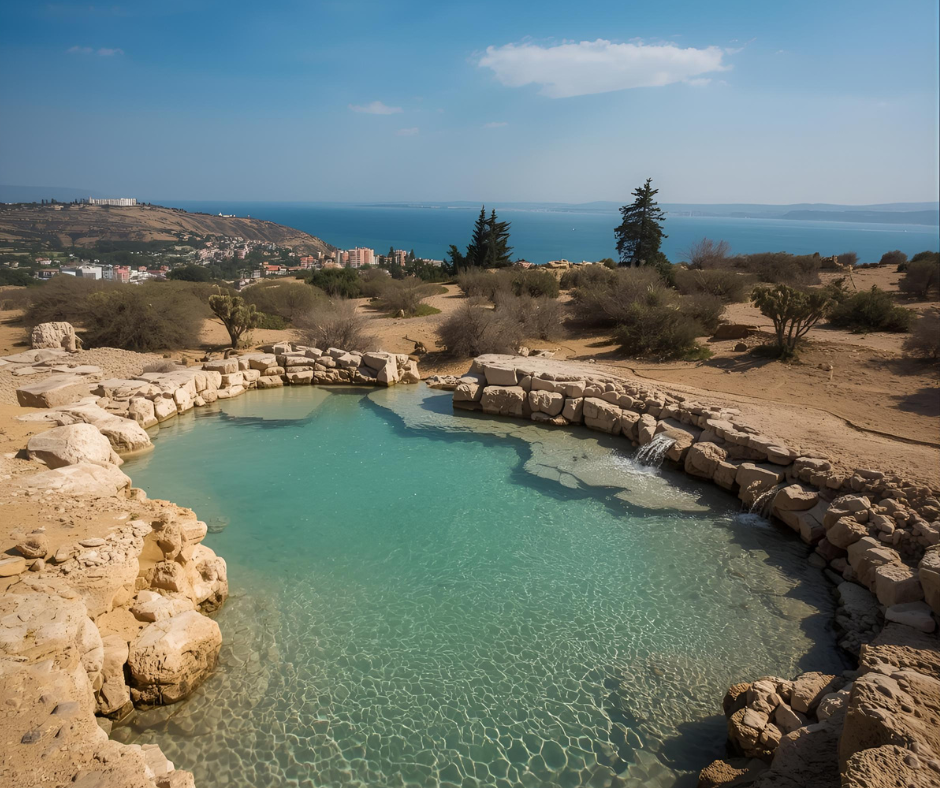
Location: Tiberias
Subject: Tiberias Hot Springs
Written by: David Magence
Rashi quotes our Sages' observation [Bereishit Rabba, 33:4] that at the end of the Flood, not all springs were plugged up, since those which are necessary for the world were not closed. The example presented by the Midrash is the Tiberias Hot Springs.
While there are numerous hot springs within Israel, it is not surprising that the Sages refer specifically to the springs of Tiberias, since they were in the city the Sages lived. Following the defeat of the Bar Kochva revolt (135 CE) the Romans made it a capital crime for a Jew to enter Jerusalem and the vicinity, and the Galil became the center of Jewish life in Israel, with Tiberias being the most important city. In fact, Tiberias was home to the greatest yeshiva of Eretz Yisrael during the Talmudic Period. Thus, our Sages were very familiar with the hot springs at the southern end of Tiberias.
At the Tiberias Hot Springs National Park, one can see (and smell) the water of the hot springs. A highlight of the national park is the remains of an ancient synagogue, with beautiful mosaic floors.
Chevron
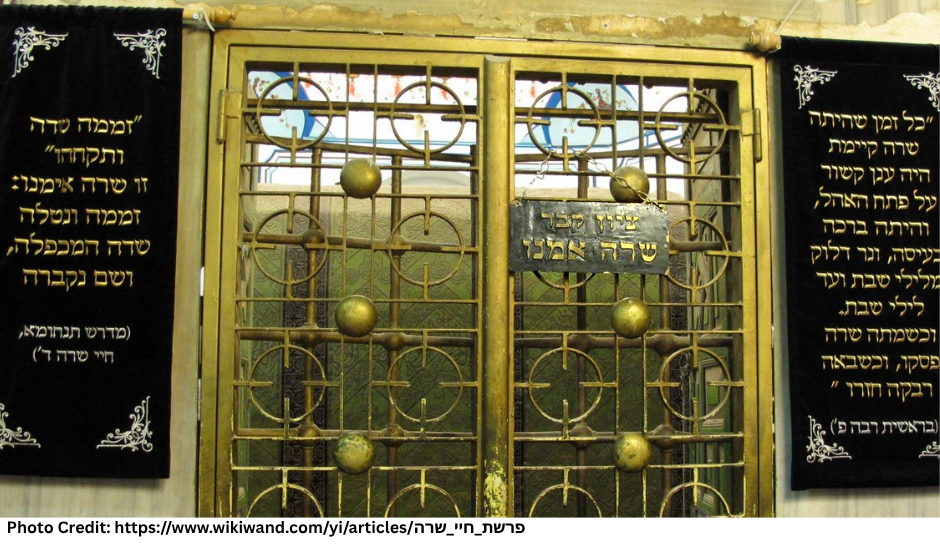
Location: Chevron
Subject: Mearat Hamachpela
Written by: David Magence
The pesukim (Bereishit Perek 23 Pesukim 17-19) summarize the negotiations between Avaraham Aveinu and the Hittites for the purchase of Me'arat HaMachpela and its field, which was the first land purchased in Eretz Yisrael by our Forefathers.
The walls around the complex were built more than 2000 years ago, apparently by King Herod. The actual cave is beneath the floor level. There is an entrance to the cave within Ohel Yitzchak, but it is not open, and very few people have actually seen the cave.
Yam Hamelach (Dead Sea)

Location: Yam Hamelach (Dead Sea)
Subject: Yam Hamelach
Written by: David Magence
Sedom and Amora were located along the shore of the Dead Sea. Lot chose Sedom because it was a very fertile area before Hashem destroyed Sedom and Amora. [Breishit Perek 13:Posuk 10]
Three Neviim (Yoel, Yirmiyahu, and Yechezkel) prophesized that in the Final Redemption, water will flow from the Beit Hamikdash to the Dead Sea, turning the water from the saltiest body of water in the world to a fresh water lake, with all kinds of fish flourishing in it and all types of fruit trees growing along its shores. Thus, the Dead Sea area will be returned to its flourishing status prior to the destruction of Sedom and Amora.
Tel Dan (HaGalil)
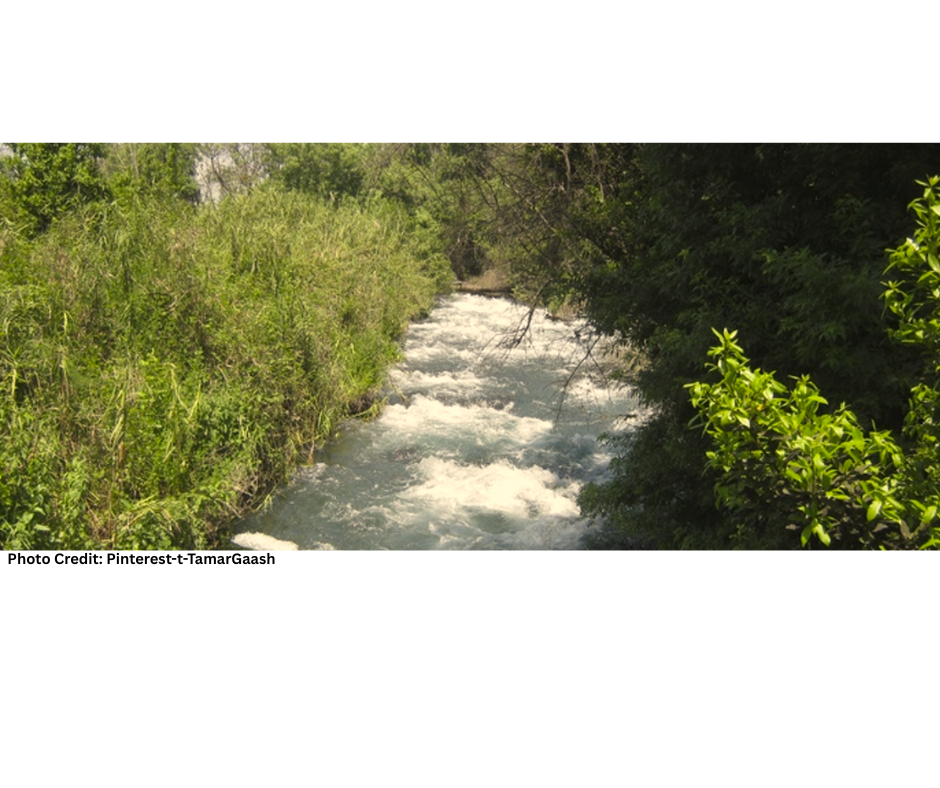
Location: Tel Dan (HaGalil)
Subject: Tel Dan Nature Reserve
Written by: David Magence
In Avraham Avinu's campaign to rescue his nephew Lot, he and his three hundred and eighteen men chased the coalition of four kings to Dan.
At the Tel Dan Nature Reserve, one can see the gate to the city and walk the paths of the nature reserve, whose springs are the largest of the three sources of the Jordan River.
Beit Guvrin

Location: Beit Guvrin
Subject: Yitzchak's Blessing
Written by: David Magence
Midrash Bereishit Rabba [67:6] states that "from the dew of heaven" refer's to Beit Guvrin, which is a very fertile area. In fact, the blessing relates specifically to grain and wine. Approaching Beit Guvrin from the north, one passes wheat fields, and continuing south one passes vineyards, a reality which corresponds to the Midrash.
Within the Beit Guvrin National Park there are approximately 3000 man-made caves. Some were used as olive presses, others as cisterns or granaries, and some were used as hideouts during the Bar Kochva revolt.
Beer Sheva

Location: Beer Sheva
Subject: Tel Sheva
Written by: David Magence
Approximately four kilometers east of modern Beer Sheva, is Tel Be'er Sheva, which some scholars identify as the biblical Beer Sheva. However, the earliest structural remains excavated dates to a period later of that of the Avot.
Perhaps the most interesting find in the excavations was a horned altar. In ancient times, the altar was dismantled and its stones used to build a store house. Based upon the archeologist's dating, it can be assumed that the altar was dismantled as part of the religious reform of KIng Chizkiyahu as related in Tanach [Melachim II Perek18 Posuk 4].
Outside the gate of Tel Be'er Sheva, there are remains of a sixty-nine meter (226 feet) deep well, which may be the well mentioned in connection with Avraham and Yitzchak Avinu.
Beit Lechem
Location: Beit Lechem
Subject: Kever Rachel
Written by: David Magence
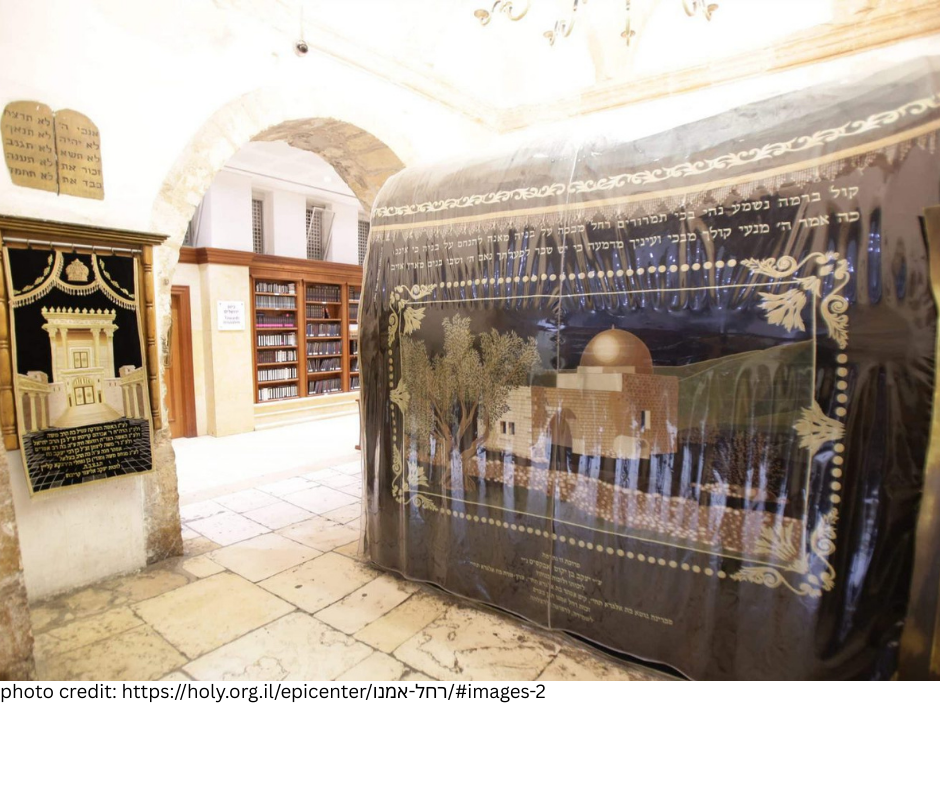
Parashat VaYishlach describes the death of Rachel Imeinu and her burial "On the road to Efrat, which is Bet Lehem." Since the times of the Talmud, tradition has identified the Tomb of Rachel at the northern end of the city of Bet Lehem.
Today, the complex around the traditional tomb is built as a fortress. The inner structure was built by Sir Moses Montefiore (1784 – 1885). The tomb of Sir Moses and Lady Judith Montefiore in Ramsgate, England is an exact replica of the structure built over Rachel's Tomb.
One does not see the actual tomb, but a cenotaph (stone marker) above the tomb. The cenotaph is covered with a cloth on which are embroidered the words of Yirmiyahu's prophecy concerning Rachel Imeinu[31:14-16]:
"So says the Lord: A voice is heard on high, lamentation, bitter weeping, Rachel weeping for her children, she refuses to be comforted for her children for they are not. So says the Lord: Refrain your voice from weeping and your eyes from tears, for there is reward for your work, says the Lord, and they shall come back from the land of the enemy. And there is hope for your future, says the Lord, and the children shall return to their own border."
Adullam
Location: Adullam
Subject: Adullam Park
Written by: David Magence
When Yehuda departed from his brothers after the sale of Yosef, he resided in the Adullam region (Bereishit Perek 38 Pousk 1).
The king of Adullam is mentioned in the list of the 31 kings Yehoshua defeated in the conquest of Eretz Yisrael (Yehoshua Perek 12 Posuk 15).
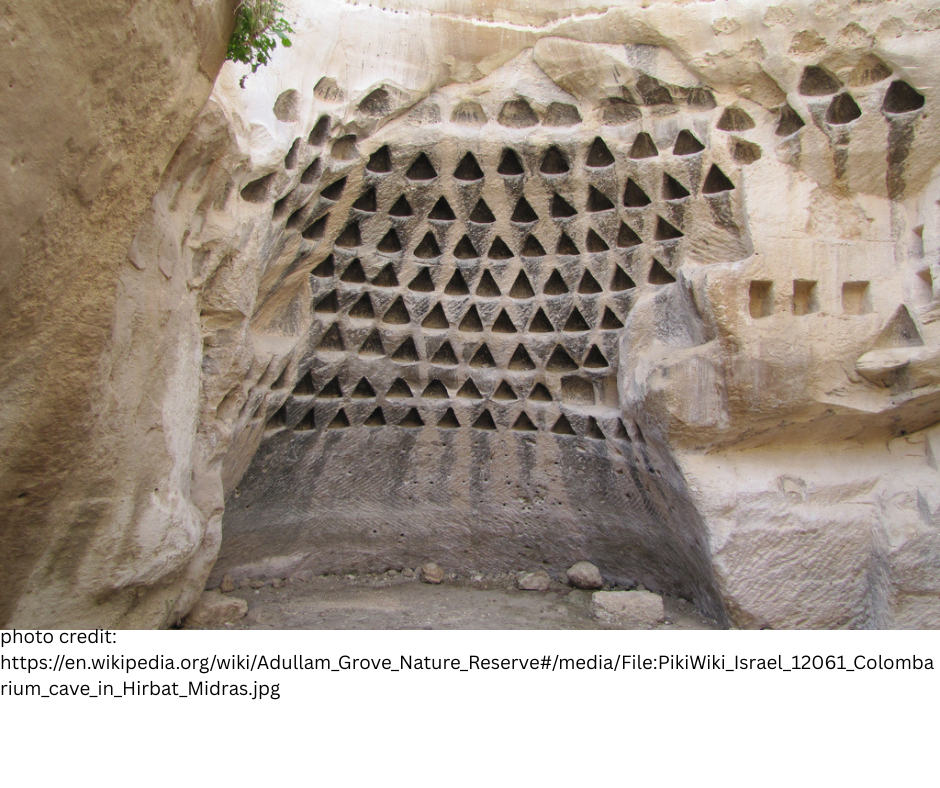
Centuries after Yehuda reached Adullam, his descendent David found refuge in the Cave of Adullam before becoming the king of Yehudah (Shmuel I Perek 22 Posuk 1). The Adullam Park contains numerous caves, most likely including the cave in which David hid.
During the Bar Kochva revolt, many of the caves of Adullam were used by Jews to hide from the Roman army.
Ein Gedi
Location: Ein Gedi
Subject: Tzori
Written by: David Magence
Tzori (balm) was highly valued in the ancient world, both as a spice and for its medicinal value. Tzori was grown largely in Eretz Yisrael, specifically in Ein Gedi and Yericho.
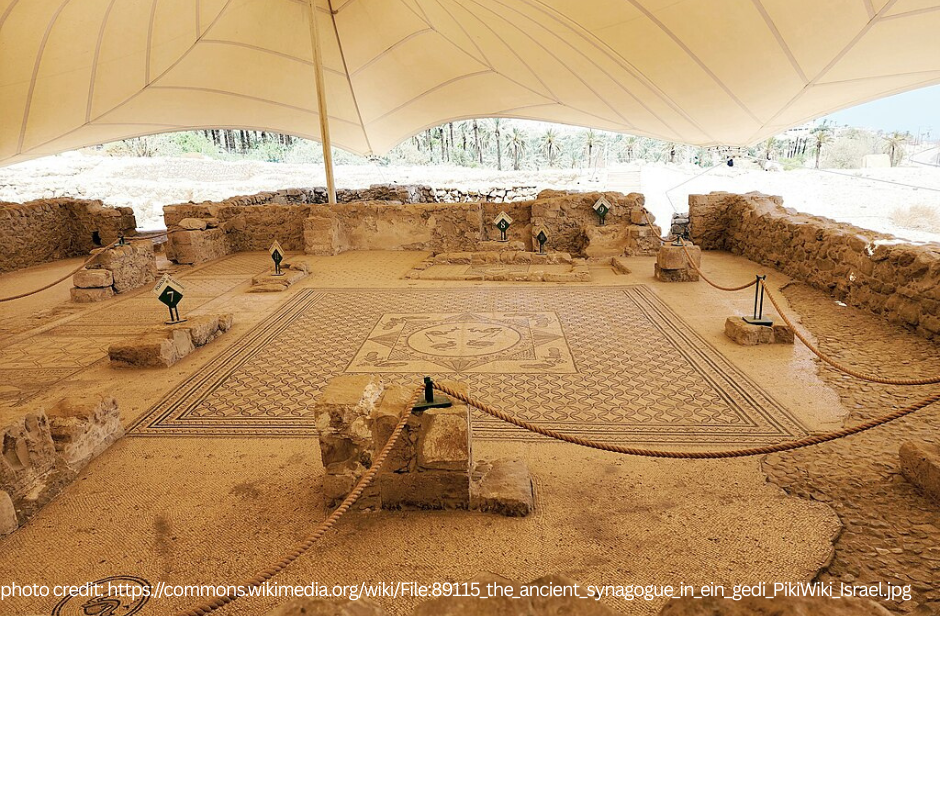
South of the Ein Gedi Nature Reserve, archeologists uncovered the remains of an ancient synagogue. One of the mosaic inscriptions, apparently from the 5th century CE, includes a curse of anyone who "reveals the secret of the town." The suggestion is that the secret refers to the techniques of growing Tzori.
Yishuv Etz Efraim
Location: Yishuv Etz Efraim
Subject: Yishuv Etz Efraim
Reference: Haftarah of Vayigash, Yechezkel Perek 37 Posuk 16
Written by: David Magence
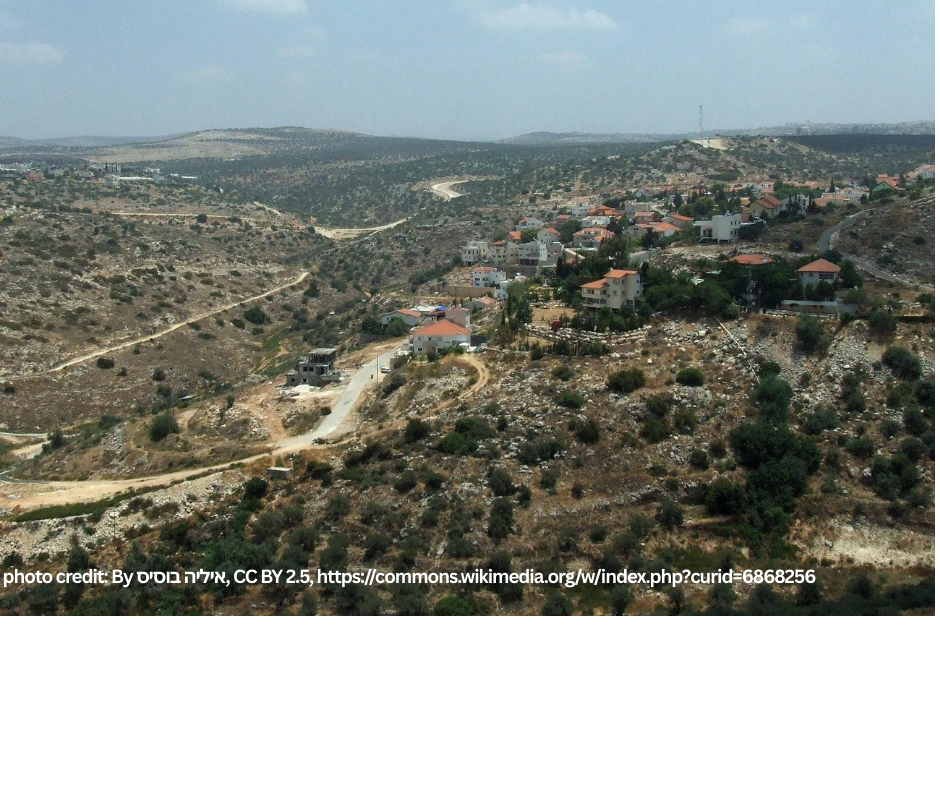
Etz Efraim is the name of a modern Yishuv in the Shomron, which was established in 1985. The name is taken from the opening posuk of the parasha's haftarah, and was chosen both because the yishuv was established Motzaei Shabbat Vayigash and because of the fact that it is in the portion of Shevet Efraim. The population of the Yishuv is mixed, including religious and secular Jews, and perhaps this fits the prophecy of Yechezkel of unity (posuk 19).
In ancient times, the area was agricultural land in Shevet Efraim, and indeed in proximity to the Yishuv, there are remains of ancient agricultural structures, including shomerot - watch towers used for storing and protecting the agricultural produce.
Kever David
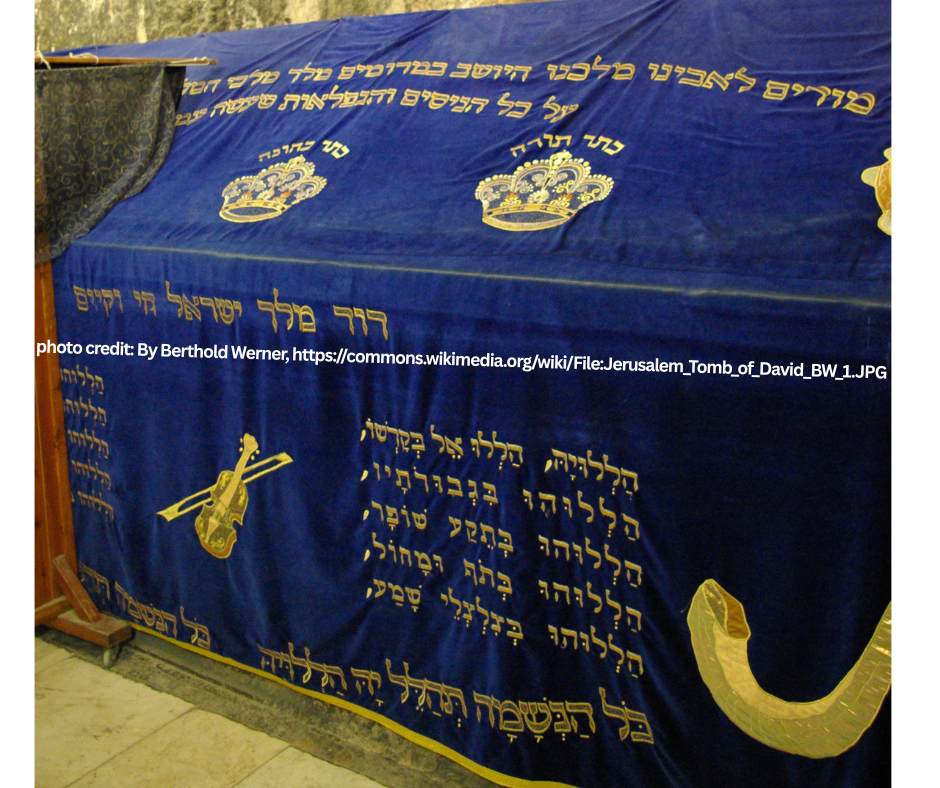
Location: Ir David
Subject: Kever David
Reference: Haftarah of Vayechi; Melachim I Perek 2 Posuk 10
Written by: David Magence
While for the last 1500 years, tradition identifies Kever David on Har Tzion, the implication of the pesukim is that David HaMelech was buried within his city, Ir David. It is clear that Har Tzion was outside the walls of Ir David.
The "first Jewish excavations in Israel" (the excavations took place in Ir David, were funded by the Rothschild family, and the head archeologist was Raymond Weil, a French Jew) uncovered remains which may be the actual Kever David.
Unfortunately, the area was used as a quarry during the Roman and Byzantine periods, and it is impossible to know with certainty what was there at the time of David HaMelech.
However, the advantage of this suggestion is that it locates Kever David within Ir David in accordance with the "peshat" (simple meaning) of the pesukim.
Today, it is possible to see these remains while touring Ir David.
Hula Nature Reserve
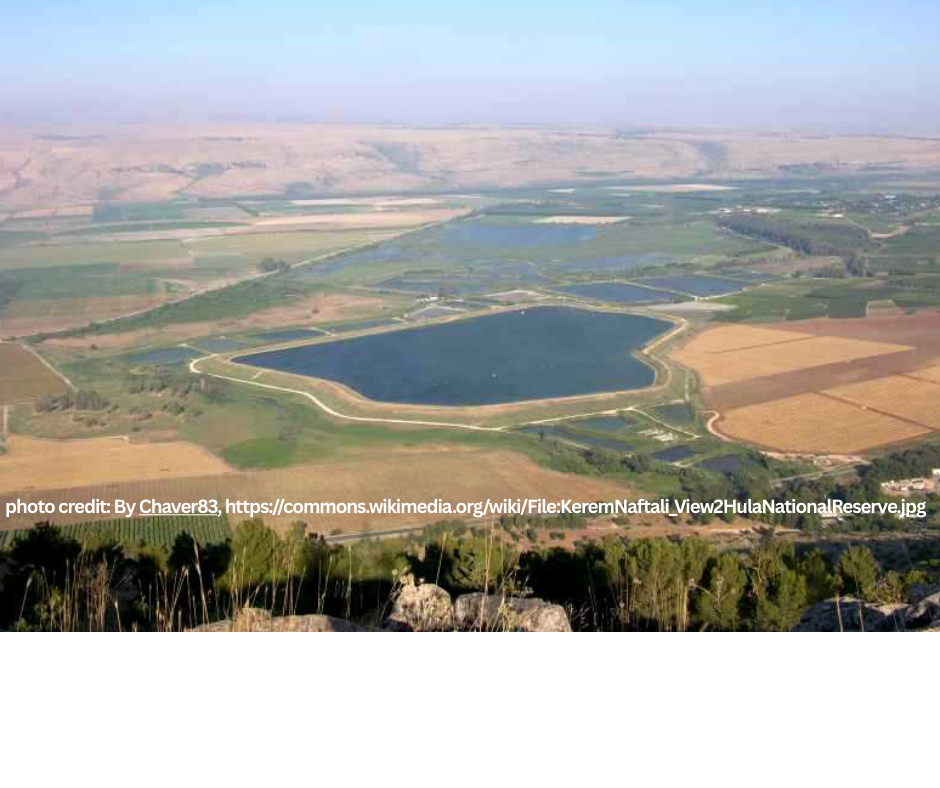
Location: Hula Nature Reserve
Subject: Papyrus (Gomeh)
Reference: Sefer Shemot Perek 2 Posuk 3
Written by: David Magence
Among the hundreds of species of Gomeh , it is accepted that Yocheved made the basket for her infant son Moshe out of papyrus.
Today, papyrus can be found in the Hula Nature Reserve, the first nature reserve established in the State of Israel in 1964. In fact, it is not truely a nature reserve, rather a reconstruction of the Hula swamps.
In the 1950's, Israel drained Lake Hula and its swamps to create agricultral land. Due to the lobbying of conservationists, it was decided to recreate swamps in a small portion of the area, and papyrus was re-planted.
Nachal Taninim Nature Reserve
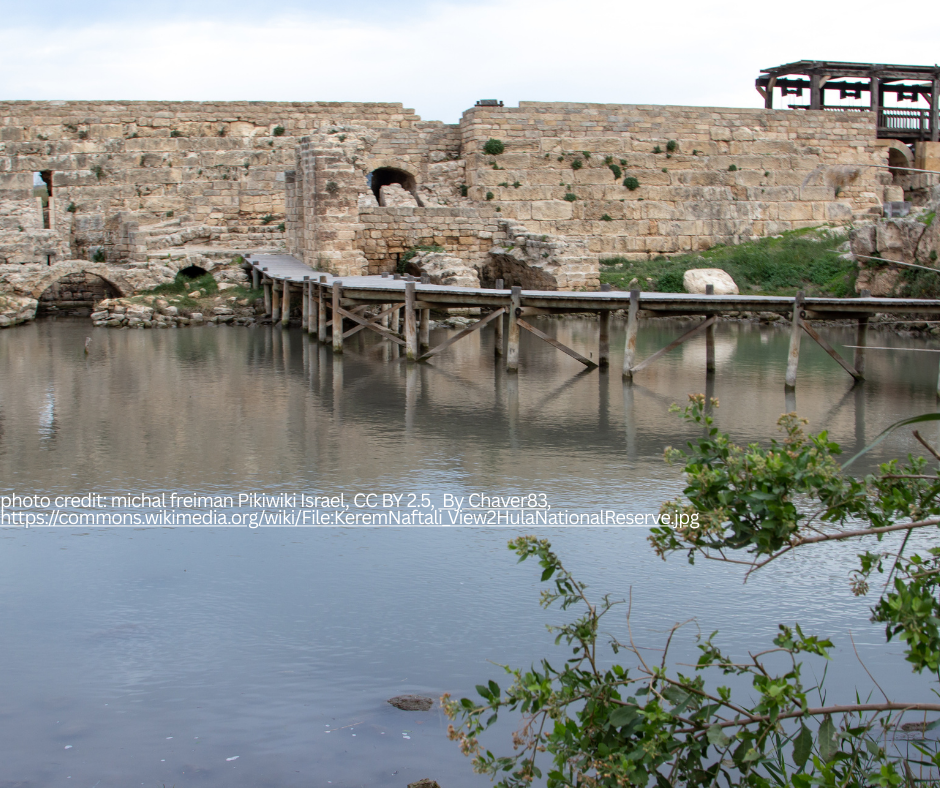
Location: Nachal Taninim Nature Reserve
Subject: Taninim (crocodiles)
Reference: Sefer Shemot Perek 7 Posuk 9
Written by: David Magence
Although Rashi and other commentaries translate "tanin" as a snake, Onkelos translates "tanin" as crocodile.
While crocodiles are not found in Israel today, their memory is preserved in Nachal Taninim, which is north of Caesarea. Nachal Taninim is a perennial stream, which currently is the only non-polluted stream which flows into the Mediterranean Sea, and is named for the crocodiles which lived in the area until they were hunted into extinction. The last crocodile seen in Nachal Taninim was in 1912.
Legend (which is unconfirmed) says that the crocodiles were brought by the Romans 2000 years ago for gladiatorial combat in the nearby amphitheaters of Caesarea and Shuni.
It is possible to walk along the banks of Nachal Taninim to the point where it flows into the Mediterranean.
Kochav HaYarden National Park
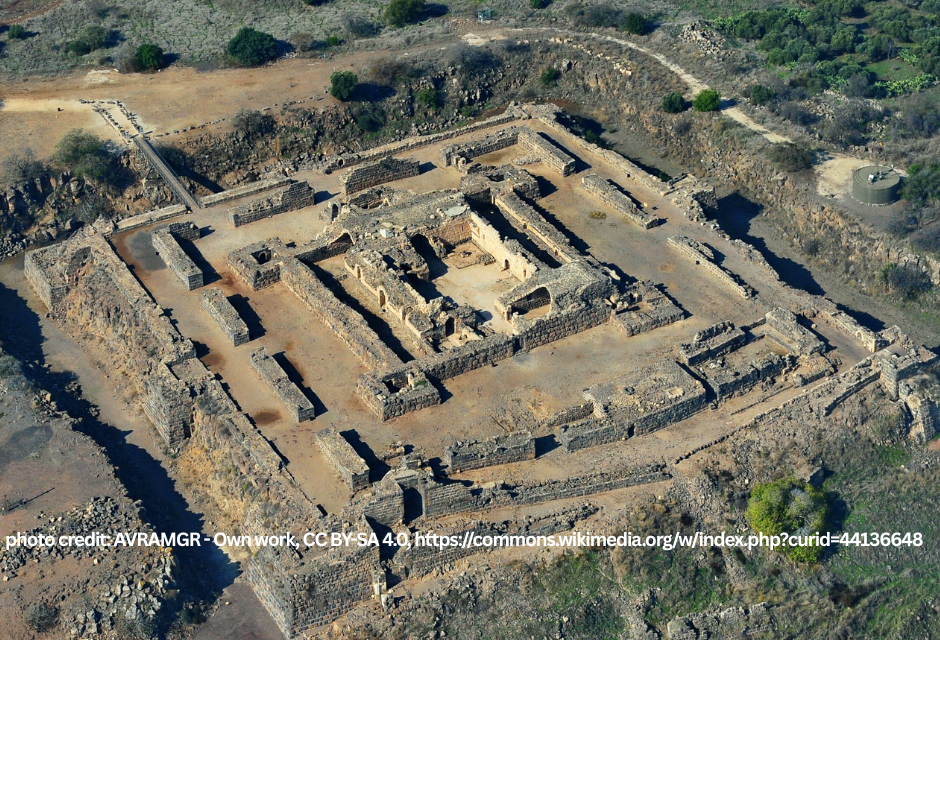
Location: Kochav HaYarden National Park
Subject: Bonfires to announce Kiddush HaChodesh
Reference: Mesechet Rosh Hashana Perek 2 Mishnayot 2-4
Written by: David Magence
Parashat Bo presents the first mitzvah which was given to Israel as a nation, Kiddush HaChodesh. In ancient times, when the Sanhedrin sanctified the new months, they would light bonfires on specific mountain tops to announce the new month (Mishna Rosh Hashana 2:2-4). In this manner, even without modern communication techniques, it was possible to inform Jewish communities not only in Israel but in the diaspora as well, that the new month had begun
The third bonfire station was known as Grofina (ibid., Mishna 4). One of the suggestions for the location of Grofina is Kochav HaYarden, which rises above the northern end of the Jordan Valley. On the slope of the mountain, there are remains of the ancient Jewish community of Kochav, which existed during the period of the Mishna and Talmud.
On the heights of Kochav HaYarden, are the remains of a Crusader fortress named Belvoir (the French translates as "Beautiful View"). Indeed, there is a beautiful view of the southern part of the Kineret and the northern portion of the Jordan Valley. Clearly, the strategic view from Kochav HaYarden is the reason Chazal (our Sages) and the Crusaders chose this hill.
While visiting the remains of the fortress, one can see that the Crusaders used stones from the remains of the Jewish community Kochav. In particular, a stone engraved with a menorah was used as part of the doorpost of the western gate of the fortress.
Laturn
Location: Laturn
Subject: Merkava
Reference: Sefer Shemot Perek 15 Posuk 4
Written by: David Magence
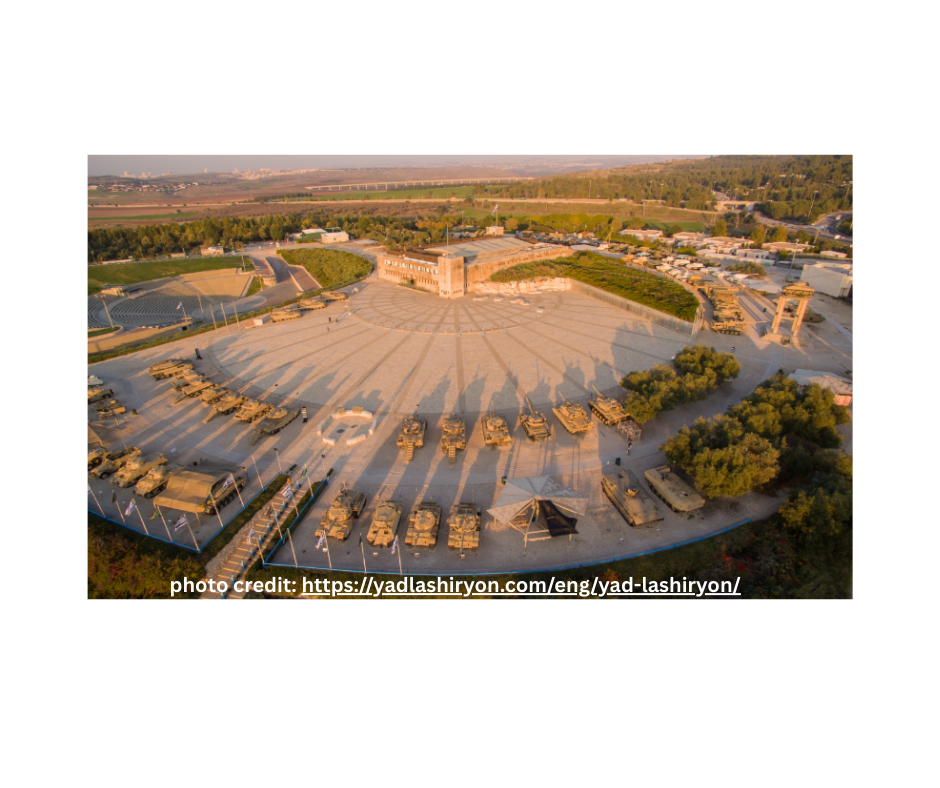
The chariot is the ancient version of the modern tank. In fact, the Israeli designed and manufactured main battle tank is called Merkava (chariot).
At Laturn, the main memorial site for Israel's Armored Corps, the ancient and modern merkavot are on display; the modern merkava is an actual tank, and the ancient Egyptian and Israelite chariots are models based upon graphic evidence. The model of the Egyptian chariot is based upon a painting in an ancient pyramid, and the Israelite chariot is based upon a three dimensional depiction of the battle of Lachish during the time of the Assyrian king Sancheiriv.
Mount Herzl
Tzidkiyahu-Cave
Location: Tzidkiyahu's Cave
Subject: Tzidkiyahu's Cave
Reference: Haftara of Mishpatim; Yirmiyahu Perek 34 Posuk 21
Written by: David Magence
In the Haftara of Mishpatim, Yirmiyahu prophesied a bitter end for King Tzidkiyahu, the last king of the Davidic dynasty until the arrival of Mashiach.
In fact, as Yerushalayim was being captured by the Babylonians,Tzidkiyahu escaped the city, only to be caught in the plains of Yericho (Melachim II Perek 25 Posuk 5).
Rashi (Sefer Yechezkel Perek 12 Posuk 13) cites a tradition that Tzidkiyahu escaped through a cave, whose western end was near the royal palace and eastern end at the plains of Yericho.
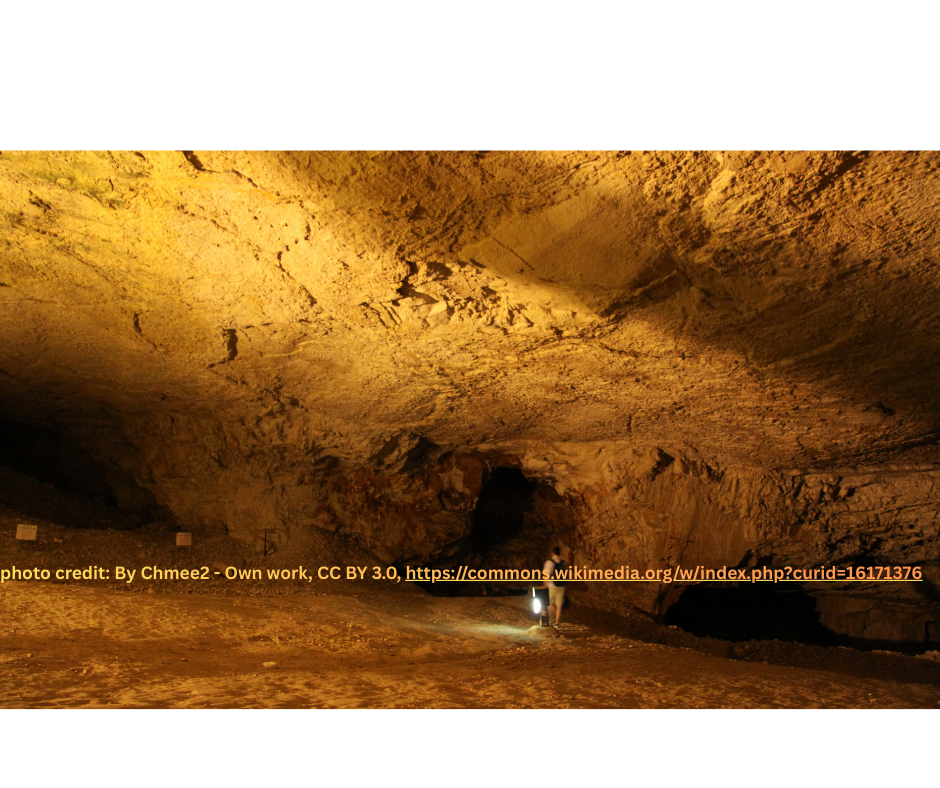
What today is called "Tzidkiyahu's Cave" is located beneath the walls of the Old City of Yerushalayim, between the Damascus gate and Herod's gate. However, since this cave has no exit, it cannot be the cave through which Tzidkiyahu attempted to escape.
In fact, the cave is a by-product of quarrying. Based upon the archeological evidence, it is clear that the quarrying was done during the Second Beit Hamikdash period. It is likely that this quarry was the major source of building stones for Herod’s expansion of Har HaBayit, including the Kotel HaMaaravi.
In fact, the cave is a by-product of quarrying. Based upon the archeological evidence, it is clear that the quarrying was done during the Second Beit Hamikdash period. It is likely that this quarry was the major source of building stones for Herod’s expansion of Har HaBayit, including the Kotel HaMaaravi.
There are differing opinions concerning the possibility that quarrying was done there during the First Beit HaMikdash period.